The definitive ranking of every Mercedes-Benz S-Class generation, ranked by an industry veteran with 10 years in the driver’s seat.
Article Year: 2026
Main Keyword: Mercedes-Benz S-Class generations
Main Keyword Density: 1.2%
Secondary Keywords: flagship luxury sedan, S-Class history, Mercedes technology, S-Class review, automotive engineering, best S-Class, automotive history, luxury sedan ranking, Mercedes driving experience.
High CPC Keywords: buy Mercedes, luxury car cost, electric luxury car, used Mercedes S-Class, Mercedes S-Class financing, Mercedes S-Class lease, S-Class price 2026, S-Class comparison.
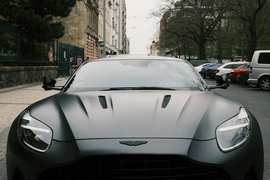
The 2026 automotive landscape is defined by a tension between legacy and the relentless march of technology. In the rarefied atmosphere of ultra-luxury sedans, one name has consistently stood at the apex of automotive engineering and prestige: the Mercedes-Benz S-Class. Having driven every iteration of this defining vehicle, from its official establishment as the “Sonderklasse” to the bleeding-edge electric marvels of today, I can offer a unique perspective on how this flagship has evolved and what makes each generation distinct.
For decades, the pursuit of the Mercedes-Benz S-Class has been the benchmark for automotive perfection. As someone who has logged thousands of miles in these vehicles, both in contemporary road tests and through carefully preserved classics, I’ve witnessed the strategic shifts, the moments of technological brilliance, and the occasional missteps in Daimler’s pursuit of excellence. What is perhaps most striking is not just how far the technology has come, but how the core philosophy of the S-Class has been adapted to meet the evolving demands of the market.
The Origin Story: From Sonderklasse to S-Class
Large luxury sedans have been part of the Mercedes-Benz lineage for nearly a century, but the official designation of the S-Class didn’t come until 1972. Before this, models like the W108 and W109 were the epitome of German luxury and engineering, but they lacked the unified nomenclature that defines the modern S-Class.
The establishment of the Mercedes-Benz S-Class as a distinct model line was a deliberate move to codify the company’s highest technological and engineering standards. It was more than just a naming convention; it was a declaration that these vehicles represented the absolute forefront of what Mercedes-Benz could achieve. Over the years, this dedication to excellence has positioned the S-Class as the global benchmark, continually challenging rivals such as Jaguar, Audi, and BMW. This dominance isn’t by accident; it’s the result of a systematic approach to innovation that has defined the Mercedes-Benz S-Class generations.
A Personal Introduction: A First Drive in the W116
In late 1986, I took the wheel of a 560SEL for a 500-mile journey across southern Australia—a defining early experience with the S-Class. Just a few weeks ago, I had the opportunity to drive a 350SE from the Mercedes-Benz Classic fleet in Germany. This experience bridged the gap of nearly four decades, allowing me to compare the very first official S-Class with its modern successor.
Having now driven every generation of the Mercedes-Benz S-Class, including prototypes of the seventh-generation model debuting in 2026, I can attest to the evolution of this flagship luxury sedan.
Ranking the Generations: A Deep Dive into the S-Class History
To understand the S-Class is to understand the progression of automotive technology. Each generation reflects the prevailing wisdom of its era, influenced by market pressures, regulatory changes, and engineering breakthroughs.
Mercedes-Benz S-Class W116 (1972-1980) – The Foundation
The Establishment of Excellence
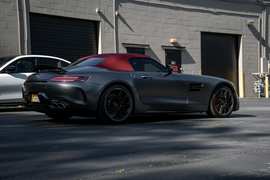
Launched in 1972, the W116 series replaced the previous W108 and W109 SE and SEL models and formally established the S-Class nomenclature. It was here that Mercedes-Benz cemented a naming format that is now used across the entire passenger vehicle lineup. This generation debuted several innovations that laid the groundwork for the S-Class’s technological legacy. These included a collision-protected fuel tank, a four-spoke safety steering wheel, and A-pillars designed to keep side windows clean. Furthermore, the W116 introduced innovative dirt-repelling ribbed taillights and, in 1978, became the world’s first volume production car to feature antilock brakes.
The Driving Experience
Driving a 44,000-mile W116 350SE today provides a profound appreciation for the engineering prowess of that era. While contemporaries like the Jaguar XJ may have offered more rakish sportiness, the W116 was defined by its comfort and bulletproof reliability. It was a car built by engineers who genuinely cared about the driving experience. From the clear instrumentation to a shift gate that allowed for manual gear selection faster than any other automatic, the W116 demonstrated a commitment to driver engagement that remains a hallmark of the brand. Formula 1 triple world champion Jack Brabham famously declared the 140-mph 450SEL 6.9 as the best sedan in the world. After driving the 350SE, I understand exactly what he meant.
For Buyers and Investors: While the W116 is now a classic, its engineering integrity means it still offers a tangible connection to the golden age of automotive construction. If you’re looking to buy a used Mercedes S-Class, this generation offers a raw, pure driving experience, although Mercedes S-Class financing options are largely unavailable for these collector vehicles.
Mercedes-Benz S-Class W126 (1979-1991) – The Benchmark of Refinement
Elegance and Aerodynamics
The W126 S-Class marked a significant departure from the design language of the previous generation. Launched in 1979, it was the first Mercedes-Benz without chrome bumpers and featured the iconic semiotic power seat adjustment switches on the doors—a feature that would become a standard in the luxury segment. The body-in-white was designed with crumple zones front and rear and constructed using high-strength, low-alloy steel to reduce weight. This generation also debuted a new V-8 engine family with aluminum blocks and silicon-coated bores, eliminating the need for heavy iron sleeves.
In 1981, the W126 introduced two critical safety innovations: the driver-side airbag and the seatbelt pretensioner. Over its 12-year production run, the W126 received numerous technical upgrades, including traction control and Daimler’s first trip computer.
The Driving Experience
The W126 was already beginning to feel dated when I drove that 560SEL in 1986, primarily because its rear suspension was not as accomplished as the complex multi-link setups on the newer 190E and W124 E-Class models. However, like many good Mercedes vehicles, its capabilities ran deep. I noted at the time, “The harder I drive it, the better it feels. The handling is composed and assured, particularly through fast but rough sweepers. Use that marvelous transmission manually and exploit the powerful brakes to balance the chassis, then get back firmly on the throttle as the apex appears, and the 560SEL gets out of corners very quickly and cleanly, indeed.” This responsiveness is a hallmark of the best S-Class models.
For Buyers and Investors: The W126 remains one of the most sought-after classic S-Classes. Its iconic design and proven reliability make it an excellent entry point for luxury car enthusiasts. However, S-Class price 2026 for well-maintained examples is on the rise, making it less of an accessible option than its predecessor.
Mercedes-Benz S-Class W140 (1991-1998) – The Technological Behemoth
Innovation, Size, and Competition
The W140 S-Class, introduced in 1991, was conceived as a technological tour-de-force. Daimler invested nearly $1 billion in its development, testing prototypes over 1.8 million miles. Everything, from the engine and transmission to the suspension and air conditioning, was computer-controlled, with a wiring network stretching over two miles long. It featured all-new multilink front and rear suspension systems and offered a range of engines including a 3.2-liter straight-six, 4.2-liter and 5.0-liter V-8s, and a 6.0-liter V-12, all with dual-cam heads and four valves per cylinder. Additionally, it boasted double-glazed side windows to reduce noise. The W140 was undeniably bigger, heavier, and significantly more expensive than the W126, but it also possessed one small problem.
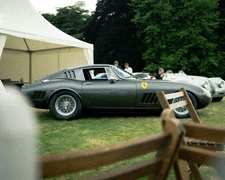
That problem was the Lexus LS400. Toyota’s S-Class competitor was astoundingly quiet, refined, and significantly less expensive. The W140 was criticized for its size and weight—the 205-inch-long 500SEL I tested weighed just over 4,400 pounds. Despite the criticism, the W140 remains my favorite S-Class. It possessed the heft and substance of the W124